
Blog
Tea & Zen

Tea and Zen: A Leaf, a Cup, a Thought, a Zen
In the long river of Oriental culture, tea and Zen have always been inseparable, nourishing each other and jointly constructing a spiritual realm of tranquility and return to authenticity. "Tea and Zen as One" is not a simple superposition of concepts, but a life philosophy that has been precipitated over thousands of years and integrated into life and practice—tea carries the Dao, Zen interprets tea, and the two are highly consistent in their spiritual core and mutually reinforcing in the process of practice, becoming a unique cultural symbol and spiritual sustenance in Oriental civilization.
The fate between tea and Zen began in ancient temples and monasteries thousands of years ago, with a profound historical origin. According to legend, practitioners of Zen need to sit in meditation, keep their hearts pure and desires few. Long periods of Zen meditation can easily make people drowsy and tired, while tea, with its clear nature and refreshing effect, can help monks dispel drowsiness and focus on their original intentions. Thus, tea became an indispensable companion in Zen practice in monasteries. As early as the Tang Dynasty, Master Baizhang Huaihai formulated the "Baizhang Qinggui" (Baizhang's Pure Rules), which clearly incorporated the "tea ceremony" into the Zen ritual. Whether in the intervals of Zen practice after the morning bell and evening drum, or when receiving pilgrims and discussing the Dao with teachers and disciples, tea was an indispensable medium. Monks planted, made, and brewed tea with their own hands. Every link, from selecting materials to brewing, strived for purity and freedom from distractions. This was not only a reverence for tea, but also a practice of Zen. Over time, drinking tea was no longer a simple act of quenching thirst, but became part of Zen practice, and the connection between tea and Zen took deep root in the soil of Oriental culture in the daily practice day after day.
The core resonance between tea and Zen lies in the high unity of the spiritual core of "calming the heart, authenticity, and indifference". The essence of Zen is to let go of obsessions, return to one's original heart, find a sense of inner peace in the noisy world, not cling to external glitz, not get entangled in worldly troubles, and look at the ups and downs of all things in the world with a peaceful mind. The nature of tea, precisely, fits this pursuit of Zen—tea grows in the mountains and fields, absorbing the essence of heaven and earth, and has a clear and peaceful atmosphere without being carved; after processes such as withering, fixation, rolling, and drying, it fades its greenness and retains its original flavor, without pretense or affectation, just like the "original face" pursued by Zen practitioners.
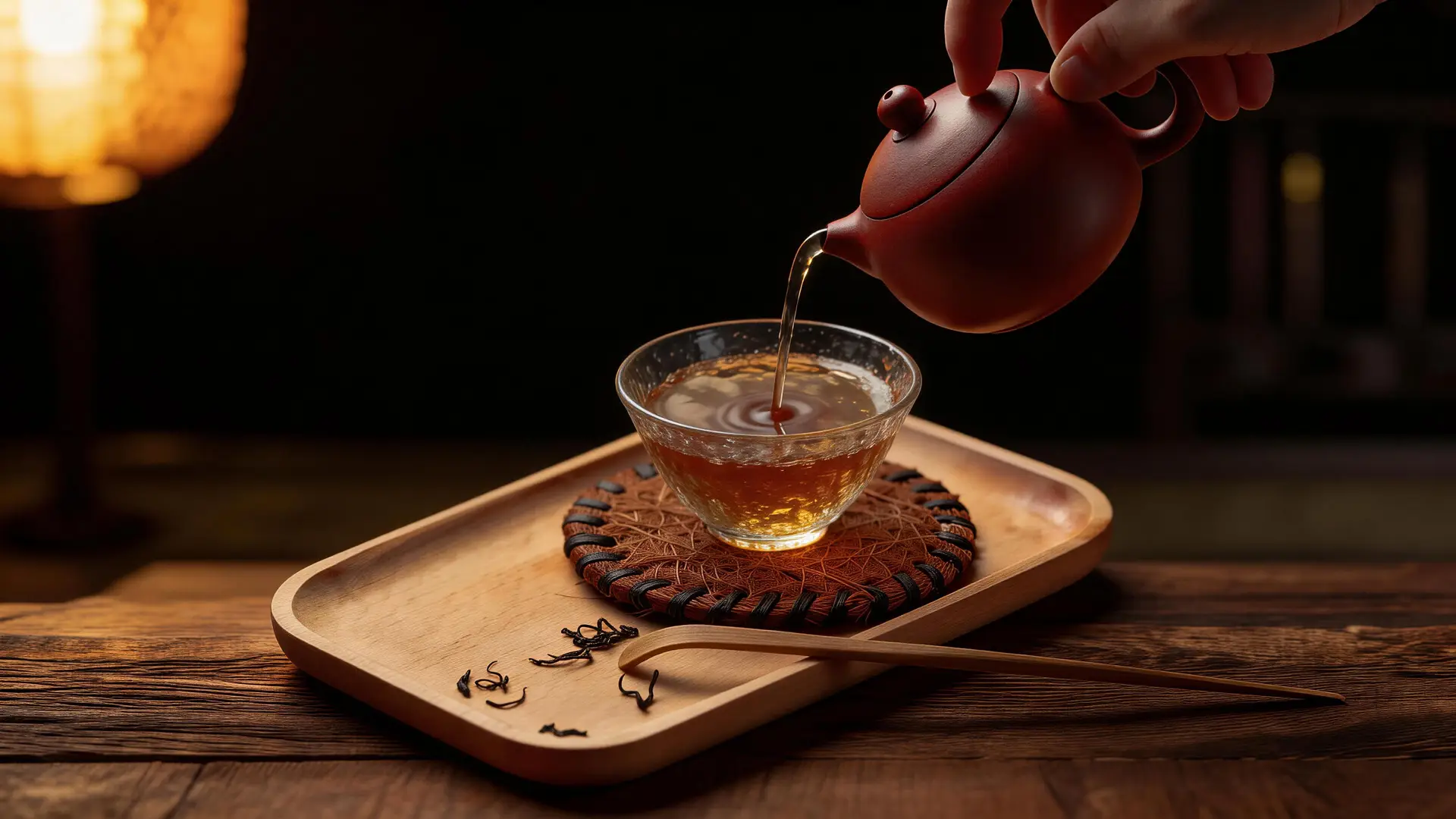
The process of drinking tea is itself a silent Zen practice, and every detail contains the wisdom of Zen. Selecting water, preparing utensils, warming the cup, brewing, serving tea, and tasting—each step is calm and focused. Choosing water needs to be clear; only pure spring water can bring out the original flavor of tea, just as Zen practice needs to purify the heart; only by abandoning distractions can one realize one's original intention. Preparing utensils needs to be simple; no complicated utensils are needed, just a plain porcelain gaiwan and a cup of clear tea are enough to carry everything, just as Zen practice does not need to deliberately pursue form; a heart without obstacles is the realm of Zen. Brewing needs to be slow; the control of water temperature and time requires wholehearted attention, just as Zen meditation needs concentration; only by living in the present can one feel the true meaning of life. When hot water is poured into the cup, the tea leaves slowly unfold and sink in the water, from curling to stretching, from dryness to warmth, just like the practice of life—only after tempering can one bloom one's true self. When tasting, do not rush to swallow; first smell its aroma, then observe its color, and then taste its flavor. Let the tea soup stay in the mouth, feel its bitterness and sweetness, just as Zen practitioners realize life—only after experiencing bitterness can one gain clarity and calmness.
The bitterness of tea is the taste of Zen practice; the sweetness of tea is the joy of Zen enlightenment. The path of Zen practice is never smooth; it requires perseverance in monotony and enlightenment in confusion, just like tasting tea. The first sip may be bitter, but after careful tasting, one can taste the hidden sweetness. This sweetness is not a deliberately pursued taste, but a natural gift after precipitation. Tea does not speak, but it can awaken inner peace with its original flavor; Zen does not show off, but it can guide people to return to their original hearts with its wisdom. In a cup of clear tea, we can let go of the hustle and bustle of the world, put aside the troubles of life, and let the impetuous heart calm down slowly. In the ups and downs of a leaf and a cup of soup, we can realize the Zen principle that "all things have their own nature" and understand the life wisdom of "letting nature take its course and governing by non-interference".
For thousands of years, tea and Zen have long transcended their own forms and integrated into the life and spiritual world of Oriental people. Whether it is the discussion between teachers and disciples in monasteries, or the daily drinking in ordinary people's homes, tea and Zen are silently conveying an attitude towards life—unhurried, neither humble nor arrogant, finding authenticity in plainness, and gaining freedom in quiet joy. Monks use tea to assist Zen and clarify their hearts and see their nature; the world uses tea to understand Zen and nourish their souls. Tea and Zen are never isolated existences, but interpenetrate each other—there is Zen in tea, and tea flavor in Zen. The two coexist and thrive, jointly interpreting the depth and elegance of Oriental culture.
Today, in the fast-paced modern life, the connection between tea and Zen is even more precious. When we are surrounded by noise and troubled by anxiety, we might as well brew a cup of clear tea, sit quietly for a moment, and let go of obsessions and return to our original hearts in the lingering fragrance of tea. There is no need to pursue complicated rituals or cling to expensive tea; just a cup of pure tea and a peaceful Zen heart are enough to find a sense of peace belonging to ourselves in a small space. This is the power of tea and Zen—it does not teach us to escape from life, but to taste tea with a Zen heart and live with a tea heart, realizing the true meaning of life and gaining inner freedom and calmness in ordinary days.